Swiss Biometrics Center (SBC)
As part of the Idiap Research Institute, the Swiss Biometrics Center (SBC) has been established with the core mission of providing testing and evaluation services to the biometrics community.
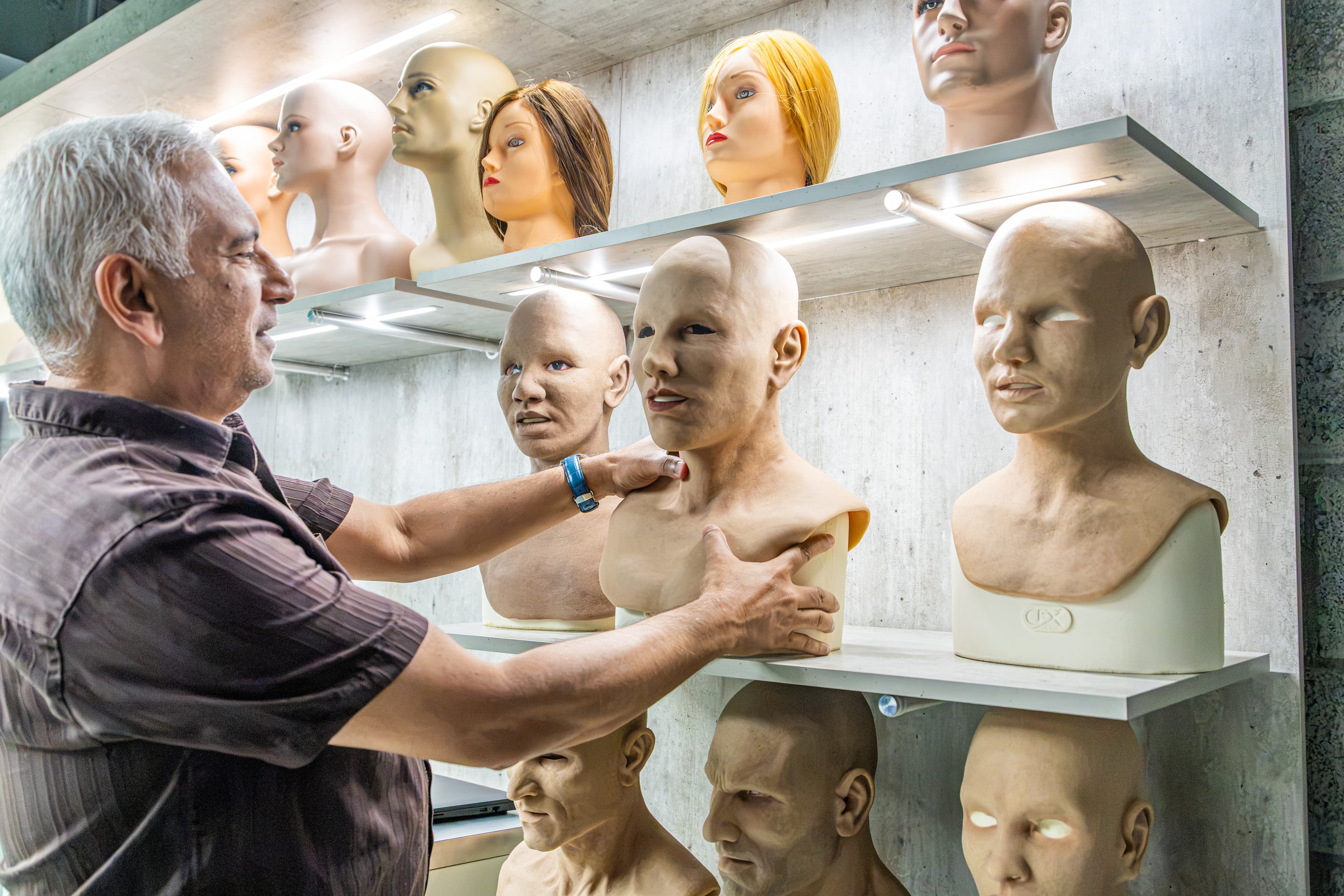
Relying on the considerable research and development expertise of the Identity Security and Privacy at Idiap, the SBC performs tests and evaluations of industrial biometrics products in an independent and unbiased fashion.
To this end, the SBC is accredited by the FIDO Alliance, to perform evaluations for their Biometrics Component Certification (BCC) scheme. We are also accredited by Google to evaluate products for Android biometrics certification. Manufacturers of biometrics products can also have their products or prototypes evaluated by us. Such independent evaluations can help manufacturers assess the state of their technology, and drive their own R&D decisions.
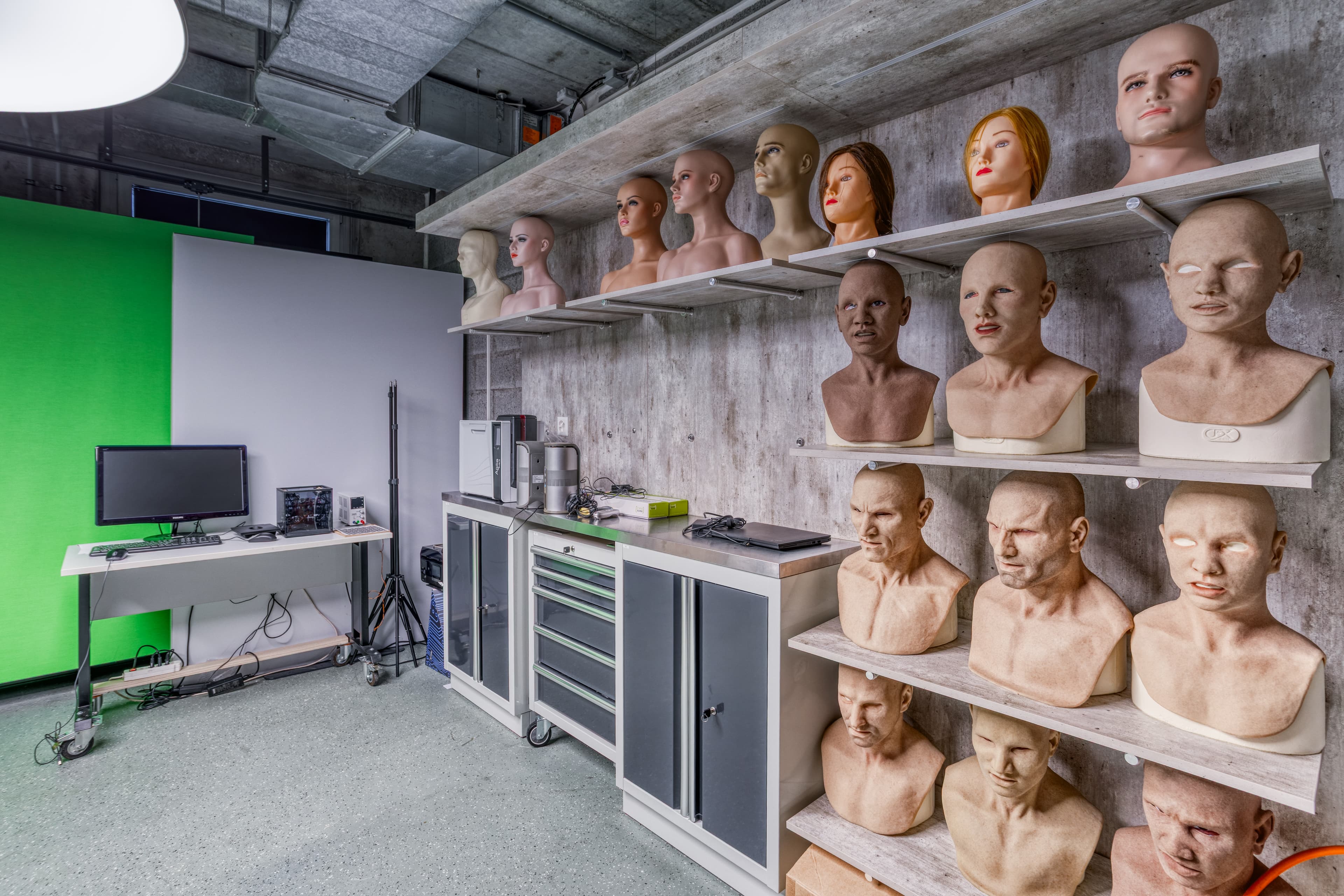
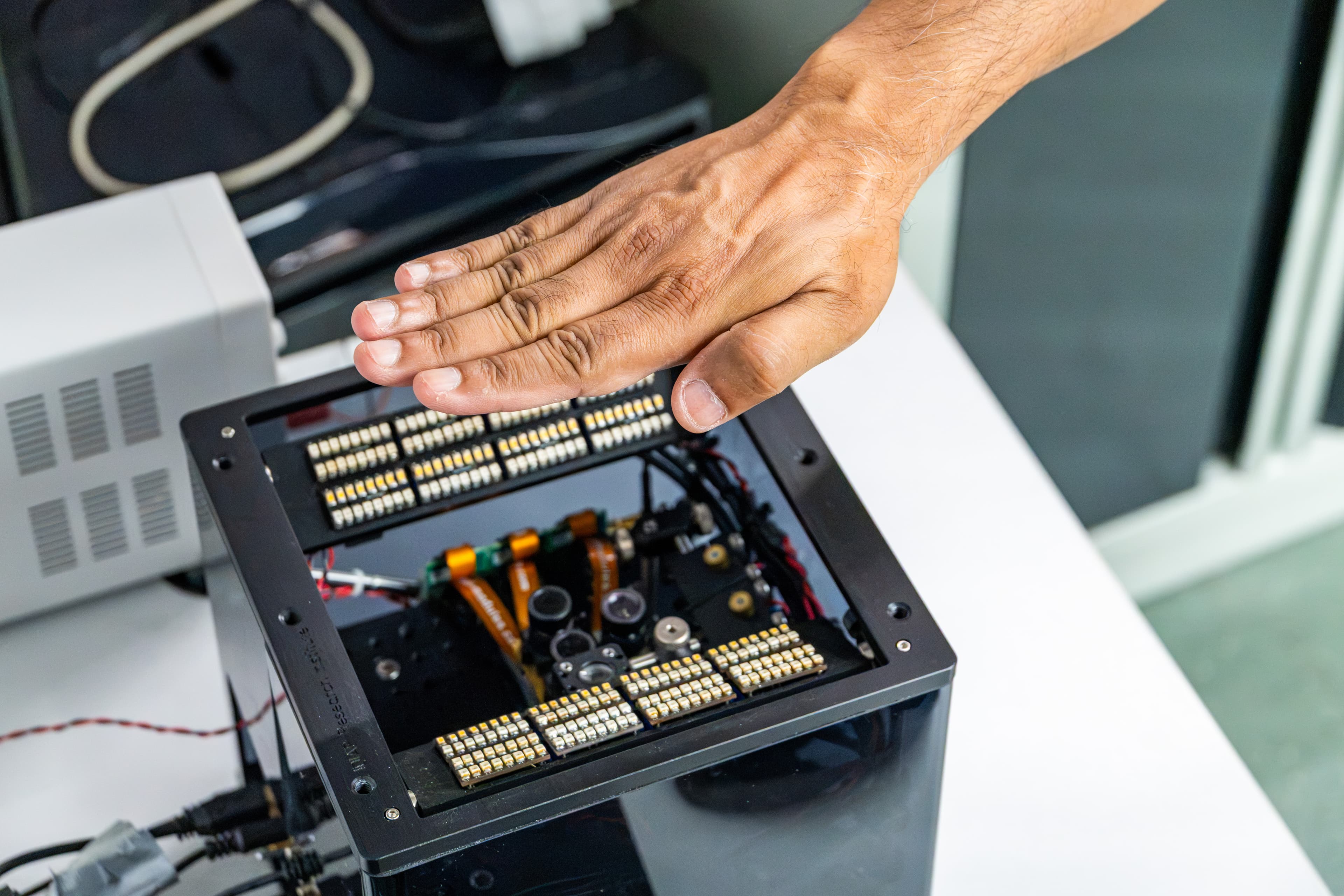
The SBC has a secure biometrics testing lab for evaluating biometrics systems. We offer the following services.
- Evaluation for FIDO Biometrics Component Certification (BCC): The SBC is accredited by the FIDO Alliance to evaluate biometrics products for FIDO BCC. These evaluations are performed following the testing protocol prescribed/approved by FIDO Alliance.
Note: The Biometric Component Certification is formally given by FIDO Alliance, not by SBC or Idiap. The SBC only provides the evaluation report to FIDO Alliance, in support of an application (by the manufacturer) for certification. Besides the cost of the evaluation of your product, the FIDO Alliance charges a separate fee for awarding the BCC. The final evaluation report is confidential to the FIDO Alliance and the vendor providing the product being evaluated.
- Android: We are also accredited by Google/Android to perform evaluations of biometrics apps for Android based devices. For these evaluations we follow the testing protocol prescribed by Google/Android.
- Independent Evaluation: The SBC can also perform a custom evaluation of your biometric system, which may be a commercial product, or even a prototype. Here, the evaluation is performed according to a test protocol agreed between you and us (SBC). The purpose of such evaluations is to provide you with an independent assessment of the current state of the prototype or product. At the end of the evaluation we provide you with a confidential report with all relevant details of the evaluation results and discussion, as well as attestation letters for public dissemination, if desired. The attestation letters are also published on our website.
All product evaluations are performed according to a service contract drawn up between Idiap and the vendor or manufacturer. These contracts usually include a non-disclosure agreement between Idiap and the manufacturer. We ensure that biometrics evaluations are performed in line with the relevant international standards, such as ISO/IEC 19795, ISO/IEC 30107, and ISO/IEC 19989.
Adherence to other standards may be explicitly mentioned in the service contract, where necessary.
Pricing: As Idiap is a non-profit institute, our evaluations projects are performed at cost. The cost of such projects varies depending on the time required for the evaluation and the cost of the necessary test materials, and is determined after a detailed analysis of your requirements. Please contact us for more details.
For Independent Evaluations of biometrics products performed at the SBC, we also provide the vendor with attestation letters for public dissemination. On this page you will find the attestation letters issued by the SBC for the evaluations completed so far.
Date of Letter | Vendor | Target of Evaluation | Evaluation Type | Version Tested | Attestation Letter |
|---|---|---|---|---|---|
2025/05/01 | Mobai | Face App | PAD Level A,B Conformant to ISO/IEC 30107 and ISO/IEC 19989 | Client: 2.1.1 | mobai2025_letterab_30107_19989_signed.pdf |
2025/05/01 | Mobai | Face App | PAD Level A,B Conformant to ISO/IEC 30107 | Client: 2.1.1 | mobai2025_letterab_30107_signed.pdf |
2022/02/21 | Mobai | Face App | PAD Level A | Client: 2.0.0 | Superseded by evaluation on 2025/05/01 |
2022/02/21 | Mobai | Face App | PAD Level B | Client: 2.0.0 | Superseded by evaluation on 2025/05/01 |
2021/09/21 | Identy | Face App | PAD Level A | 1.9.4.0 | signed_identy_face_v2_levela.pdf |
2021/09/21 | Identy | Face App | PAD Level B | 1.9.4.0 | signed_identy_face_v2_levelb.pdf |
2021/08/20 | Identy | Finger App | PAD Level A | 3.0.3.0 | signed_identy_hand_levela.pdf |
2021/08/20 | Identy | Finger App | PAD Level B | 3.0.3.0 | signed_identy_hand_levelb.pdf |
2021/04/07 | Mobai | Face App | PAD Level A | Client: 1.0.1 | Superseded by evaluation on 2022/02/21 |
2021/04/07 | Mobai | Face App | PAD Level B | Client: 1.0.1 | Superseded by evaluation on 2022/02/21 |
2020/09/09 | Trinamix GmBH | Face PAD system | Face PAD | H/w: MP0031 Peacock | Not requested |
2017/12/22 | Keylemon | Oasis Face App | PAD Level A | 5.0.0b | Not requested |
2017/12/22 | IsItYou | IIY Demo App (Face Recognition) | PAD Level A | 4.1(2) | Not requested |
Who we are
Projects
Collaborative breakthrough research in Artificial Intelligence (AI) requires access to well-tuned systems, specific computing, large datasets, and dedicated storage, often only accessible to a select few. This reality slows down complementary research, as a substantial amount of project time is often dedicated to repeating setups, understanding computation and storage intricacies, data properties, and how to properly transfer systems between institutions, to pursue overall objectives. Examples can be often found in cases encompassing consortia with computational versus non-computational specialists, or containing a virtuous mixture of domain experts (medical doctors, biologists, psychologists) and data scientists. Reproducibility and technology transfer are essential tools in thriving projects, however these concepts are costly to implement and maintain. Deploying AI solutions requires multidisciplinary expertise, the right hardware, and AI specialists to tune and ready tools for collaborative use. In practice, lack of specific expertise slowdowns partner-to-partner communication affecting overall productivity. In projects with industry or government-academia partnerships driven by concrete societal needs, replicating project conclusions with different, private datasets, or allowing partners to infer from pre-trained models using adequate hardware setups, is often avoided because of these barriers. Moreover, the growing scale, complexity and impact of contemporary AI systems such as Large Language Models (LLMs) accelerates the need for accessible infrastructures which can guarantee systematised, transparent and increased collaborative work. We intend to bridge these gaps by building “CollabCloud", a cloud-based research infrastructure to boost collaborative research for current and future projects at the Idiap Research Institute. The main focal points will be boosting the ability of easily exporting researchworkflows, exploring AI models by both computational and non-computational experts, and allowing controlled access to shared storage and computing power for collaborative projects. Beyond these goals, CollabCloud will enable Idiap to participate in developing important topics shaping the future of AI, such as Federated Learning, and cloud-based scientfic networks, which require connectivity and storage capabilities adapted to such purposes. As discussed in the institutional support letter, this vision aligns well with Idiap’s future, its predicted growth (with a current data center reaching the limits of its maximum capacity), and the notion of Cross Research Groups (CRG), that is part of our 2021-2024 Research Program as approved by the Federal State Secretariat for Education, Research, and Innovation (SERI).
Idiap investigate integrated fusion approaches to Deep Neural Network (DNN)-based whole-body biometrics combining gait and face recognition. We explore fusion strategies to combine face and whole-body representations integrating ancillary information from individual modalities to cope with missing channels and adopt contrastive training (eg. cross-modal focal loss) to factor the confidence of other modalities.
The goal of this project is to research and develop a trustworthy iris/periocular biometric solution with commodity devices (smartphones, Oculus, …) capable of defending against presentation attacks (PAs) aka Spoofing Attacks. With support from Meta, we will investigate novel iris/periocular presentation attack detection (PAD) algorithms and more particularly novel neural network structures.
Decision-making tools based on Artificial Intelligence (AI) have been largely deployed in the last years in a myriad of scenarios, with the vast majority relying on Machine Learning (ML) and, more precisely, Deep Learning (DL) algorithms. These algorithms have an extraordinary capacity for enumerating and uncovering hidden factors from large amounts of data. Human specialists mostly overlook such factors due to their complexity to unfold them. Rather than hypothesizing and testing the relationship between an infinite amount of factors manually, ML algorithms can find those by systematically “looking” to high-level data correlations. Thanks to this, the last decades were full of breakthroughs in many fields, from face recognition over speech recognition to self-driving cars. However, the fact that ML is essentially data-driven by no means ensures that it will lead to fair decisions. More specifically, with this vast range of deployed applications and its influence on decision-making, aspects of fairness start to rise into the spotlight. Decision-making tools based on biometrics have been largely deployed in the last few years as part of the current DL wave. We use it daily for data protection (e.g. to unlock mobile phones or computers), law enforcement, e-gates on airports, and so on. Face Recognition (FR) is a biometric trait vastly used in practical applications, primarily because of its good compromise between usability and accuracy. Fairness aspects in FR arise when decisions favor one demographic group over others regarding the difference of false matches or false non-matches. Issues with unfair FR models have been constantly reported in the media. As mentioned above, ML-based models are essentially data-driven. Hence, data collection is a vital step in ML research. Data collection is a social phenomenon, and the face datasets available for research are a clear representation of this. If a decade ago face datasets were a representation of research institute demographics, today they are a representation of “public figure” demographics, neither of which reflects operational conditions of FR systems. Moreover, due to legal and ethical issues (e.g. GDPR), large-scale face datasets for research purposes will become scarcer. For instance, in response to an investigation carried out by the Financial Times, Microsoft terminated the MS-Celeb project, which included one of the most popular datasets for FR research; however, research continues on this dataset. This event raised a “red flag” for the research community. FR research with large-scale datasets that respect people’s privacy is now a real concern that the research community must respond to. Legal and diverse data concerning demographics is already scarce today. For instance, equally distributed large scale face datasets that cover aspects of gender, race, and age are nonexistent. In this project (SAFER) we will address these two major issues (fairness and ethics with respect to data) in FR research in two Research Objectives (RO-1 and RO-2). In RO-1, we will investigate strategies to assess and close the fairness gap. We argue that such a gap can be closed at training and scoring time. In RO-2 we will investigate strategies to close the ethics gap. To do so, we will research mechanisms to generate synthetic datasets that are diverse and large-scale. The project will cover two Ph.D. students (one research objective per Ph.D.) over the project’s duration and one Post-Doctoral researcher for two years. The Post-Doctoral researcher will bring experience and ensure knowledge transfer to guarantee reproducible research for legacy students, academia and our industrial partner (SICPA). Indeed, in addition to the open science guidelines that will be followed, we will also adhere to reproducible research principles to share our findings. We expect that SAFER will contribute significantly to the increase of fairness in face recognition, to other biometric modalities (e.g., speaker, iris, fingerprint), as well as to the machine learning field as a whole.
SOTERIA aims to drive a paradigm shift on data protection and enable active participation of citizens to their own security, privacy and personal data protection. SOTERIA will develop and test in 3 large-scale real-world use cases, a citizen-driven and citizen-centric, cost-effective, marketable service to enable citizens to control their private personal data easily and securely. Led by an SME, this project will develop, using a user-driven and user-centric design, a revolutionary tool, uniquely combining, in a user-friendly manner, a high-level identification tool with a decentralised secured data storage platform, to enable all citizens, whatever their gender, age or ICT skills, to fully protect and control their personal data while also gaining enhanced awareness on potential privacy risks. SOTERIA solution will be tested and validated through 3 real-world largescale use-cases, involving 6,500 European citizens, targeting 3 applications which usefulness has been highlighted during COVID-19 pandemic: e-learning, e-voting and e-health. This 3-year transdisciplinary project from both SSH and technology angles, will develop an innovative solution based on: a secured access interface relying on high-level identification, a smart platform processing data to transmit only the minimum personal data required, a secured data storage platform (decentralized architecture) under the full control of the citizen, an educational tool to raise awareness of citizens developed using a citizen-driven and citizen-centric approach. The technologies developed will i) empower citizens to monitor and audit their personal data; ii) restore trust on privacy, security and personal data protection of citizens in digital services; iii) be fully compliant to GDPR regulation and apply strictly the data minimization principle; iv) ensure cybersecurity.